New Evidence in Epstein Case: Kellen’s Role
Newly-released emails reveal why Sarah Kellen, Jeffrey Epstein’s key aide, was never charged — and how the Epstein trafficking network avoided full exposure.
More than five years after sex trafficker Jeffrey Epstein’s death, one of the most disturbing questions in the case remains unanswered:
Why were Epstein’s closest facilitators never charged?
Newly surfaced emails — highlighted by journalist Nick Bryant — reignite scrutiny of the unindicted women who allegedly helped operate Epstein’s child-sex-trafficking network, Sarah Kellen.

Sarah Kellen and Epstein’s Inner Circle
For years, survivors have described Kellen not as a passive employee, but as a central gatekeeper — someone who scheduled underage girls, coordinated travel, and controlled access to Epstein.
Alongside Lesley Groff, Kellen was repeatedly named by victims as someone who knew how the trafficking system functioned — and who the perpetrators were.
Under U.S. federal law, knowingly recruiting or facilitating the exploitation of minors constitutes child sex trafficking, an offence carrying penalties of 15 years to life imprisonment.
New Evidence in Epstein Case: Sarah Kellen’s Role
Yet none of these women were ever indicted.
The Emails Prosecutors Didn’t Explain
What makes Kellen’s continued freedom especially troubling are emails from 2020 between her lawyer, Susan Necheles, and federal prosecutors.
In March 2020 — before and during Ghislaine Maxwell’s prosecution — Necheles formally requested a non-prosecution agreement for Kellen.
New emails reveal why Sarah Kellen, Jeffrey Epstein’s key aide, was never charged — and how the Epstein trafficking network avoided full exposure.
In the correspondence, Kellen is framed as a victim herself — “a cog in Epstein’s wheel” — despite extensive survivor testimony describing her as an active participant in recruiting and managing underage girls.
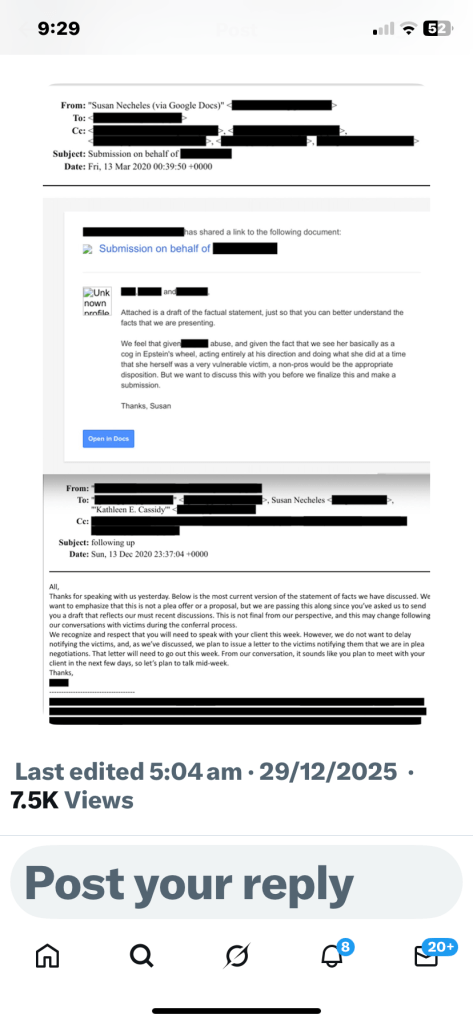
Follow-up emails from December 2020 suggest prosecutors were actively contemplating a deal.
No such deal was ever publicly acknowledged.
No indictment followed.
Ghislaine Maxwell Convicted — But the Network Shielded
Maxwell was convicted in 2021 for sex trafficking and conspiracy, yet the prosecution never meaningfully addressed the operational staff who enabled Epstein for years.
According to Bryant, indicting Kellen alone could have triggered cooperation that exposed dozens of abusers. Instead, the case effectively stopped at Maxwell.
The result:
- No public accounting of Epstein’s full trafficking pipeline
- No legal consequences for those who delivered victims
A Contradictory Public Narrative
New Evidence in Epstein Case: Sarah Kellen’s Role
Despite the emails indicating willingness to negotiate, Necheles later told The New York Times (December 2025) that Kellen “never did anything wrong and never had any intention of pleading to anything.”
That claim stands in stark contrast to the documented email trail — and highlights how the Epstein case continues to fracture between what survivors say, what documents show, and what prosecutors chose not to pursue.
Why This Still Matters
Jeffrey Epstein is dead.
Ghislaine Maxwell is imprisoned.
But the trafficking network that sustained Epstein has never been fully exposed.
Until prosecutors explain why key facilitators like Sarah Kellen were spared indictment — despite victim testimony and documentary evidence — the Epstein case remains unfinished.
 Who Was Jeffrey Epstein
Leave a Reply